A single Schlotzsky's and Cinnabon operator cut his menu repricing from a half-day chore to minutes and freed up roughly $100,000 in cash flow, all without hiring anyone. The tooling he used is the same ChatGPT Work that Uber just handed to 30,000 employees. The quiet theme this week is less about smarter models and more about agents being trusted to touch real accounts, real money and real passwords.
A RESTAURANT FRANCHISEEA Cinnabon operator reconciles cash in 94% less time
Ted Taylor runs an independent Schlotzsky's and Cinnabon franchise, the kind of small operation where the owner does the back-office math personally. Two jobs ate his week. Repricing menus every time ingredient costs moved meant updating numbers by hand across registers and boards. Reconciling cash meant matching each day's register totals against what actually got deposited, line by line.
He moved both into ChatGPT Work, OpenAI's workplace version of the assistant. Instead of recalculating prices one item at a time, he feeds in the new costs and gets the full repriced menu back; the daily cash reconciliation that used to be a manual tie-out now runs as a repeatable workflow. Repricing time dropped by 95 percent, reconciliation by 94 percent.
The headline figure is the roughly $100,000 in cash flow the new workflow surfaced, but that number depends on the ordinary part: a busy owner finally having the hours to look at his own books. The lesson is less about the model and more about which recurring, number-heavy chores a non-engineer can hand over in an afternoon.
AT&T rebuilds the front door to its own legal team
Every large company has a legal intake problem: business units fire routine questions at in-house lawyers, and those lawyers spend hours answering the same ones instead of doing the work only they can do. AT&T's in-house team, which it calls LegalEdge, went after that front door directly.
Working with OpenAI, AT&T is building a system that makes its legal knowledge easier to reach, so that common intake questions get answered without a lawyer being pulled in each time. The goal stated in the write-up is to scale legal judgment, meaning the routine requests get handled consistently while the attorneys concentrate on the genuinely hard calls.
The detail worth noting is where the effort went. This is not a public chatbot; it is an internal layer sitting on a company's own policies and precedents, which is the part that has to be built rather than bought. For any operator with an overloaded support, HR or compliance function, intake is the same shape of problem: a predictable set of questions clogging the people who should be doing the exceptions.
1Password lets an agent log in without seeing your password
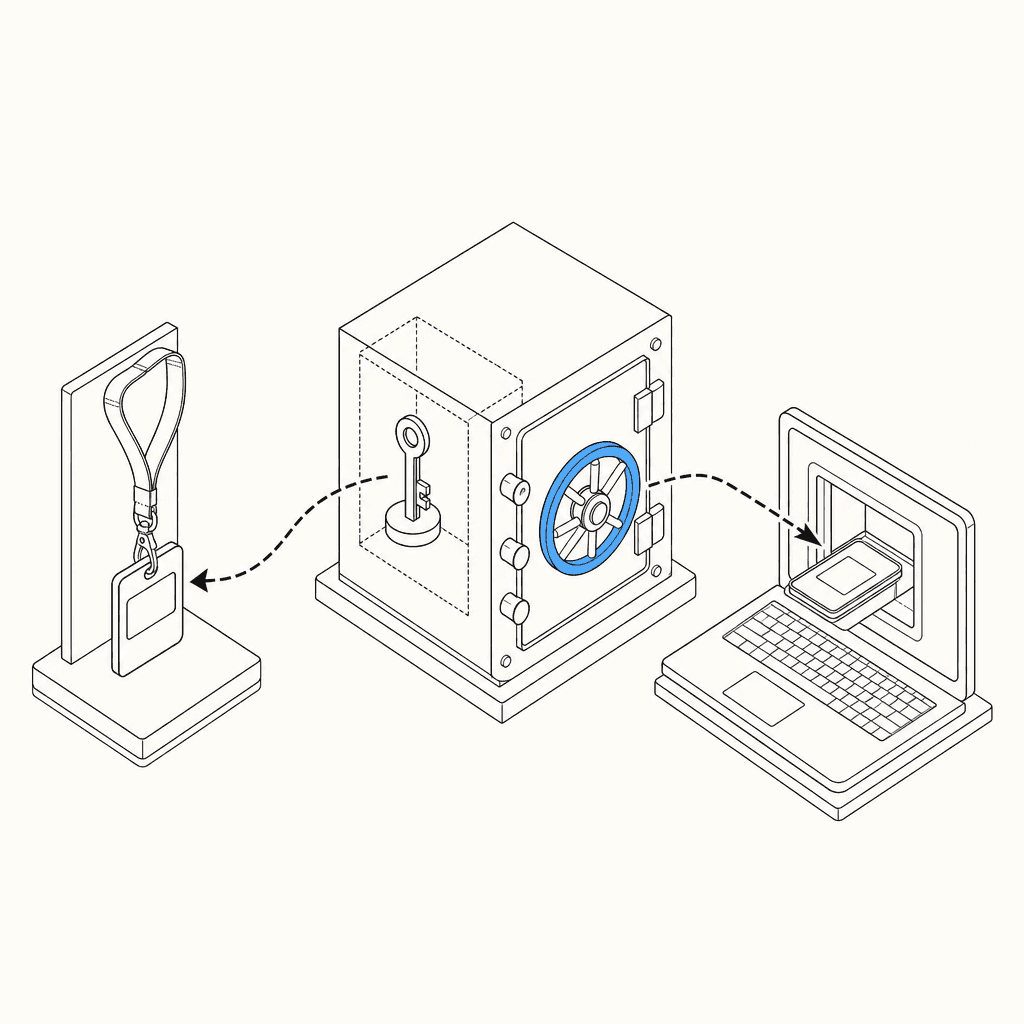
1Password, the password manager many businesses already use to store their logins, shipped a feature aimed squarely at the problem of agents acting on your accounts. Until now, giving an agent the ability to log into a service meant handing it the actual credentials, which is exactly the thing a password manager exists to prevent.
The new mechanism lets an agent sign in to a customer's accounts on their behalf while the underlying password stays sealed inside the vault. The agent gets a working session, not the secret that created it, and that access can be scoped and pulled back without rotating every password the agent ever touched.
This matters because the blocker on useful agent work is rarely the model's intelligence; it is that letting software hold your real logins is unacceptable for most businesses. A broker between the agent and your accounts is the piece that makes the rest safe to attempt, and it is now a product you can buy rather than something you have to engineer yourself.
Anthropic gives away its Agent Skills format

Anthropic donated its Agent Skills specification to the Agentic AI Foundation, a neutral body set up to steward shared agent standards. An Agent Skill is a packaged bundle of instructions plus any supporting scripts that teaches an agent one repeatable competence, such as filling a specific form or following a company's house style for a report.
Until now a skill you built was tied to the vendor you built it for. Handing the format to an independent foundation is a bet that skills should be portable, so a capability you define once can run across different agents rather than being rewritten for each one.
The consequence for a business is about lock-in and reuse rather than raw capability. If the format holds, the effort you put into teaching an agent your exact process becomes an asset that survives a change of provider, which lowers the risk of investing in that teaching work at all.
Reply and tell me which recurring task you want off your plate, and I'll tell you how Openhour would build the agent for it.