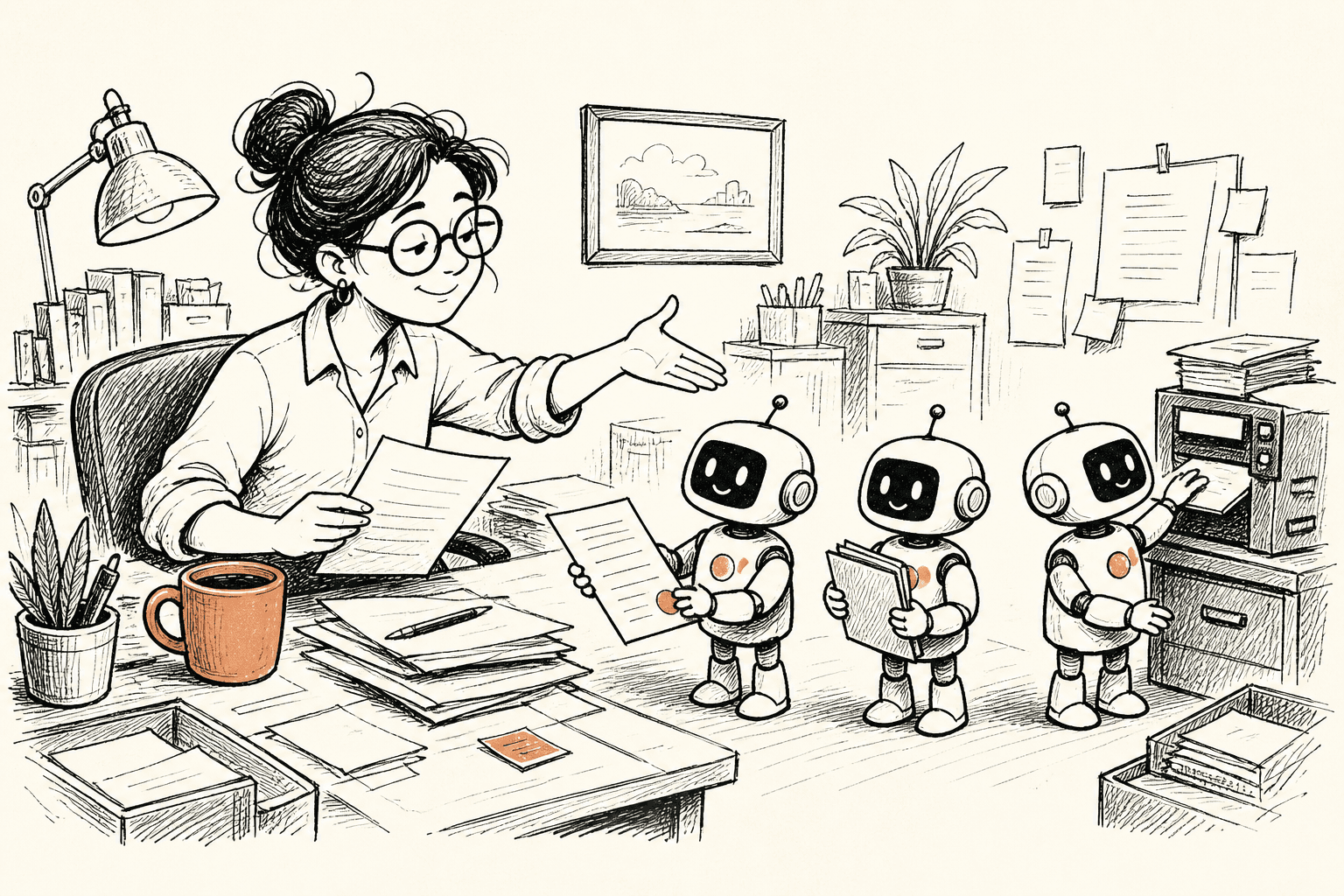
A legal-tech company is now running 530,000 contract reviews a month on top of a single model API, work that used to sit entirely with billable lawyers. Meanwhile Anthropic published a standard meant to let AI agents plug into real hardware the way software already plugs into other software. Both stories are about the same thing: the wiring that turns a model into something a business can lean on.
LEGAL TECHSpellbook runs 530,000 contract reviews a month on Claude
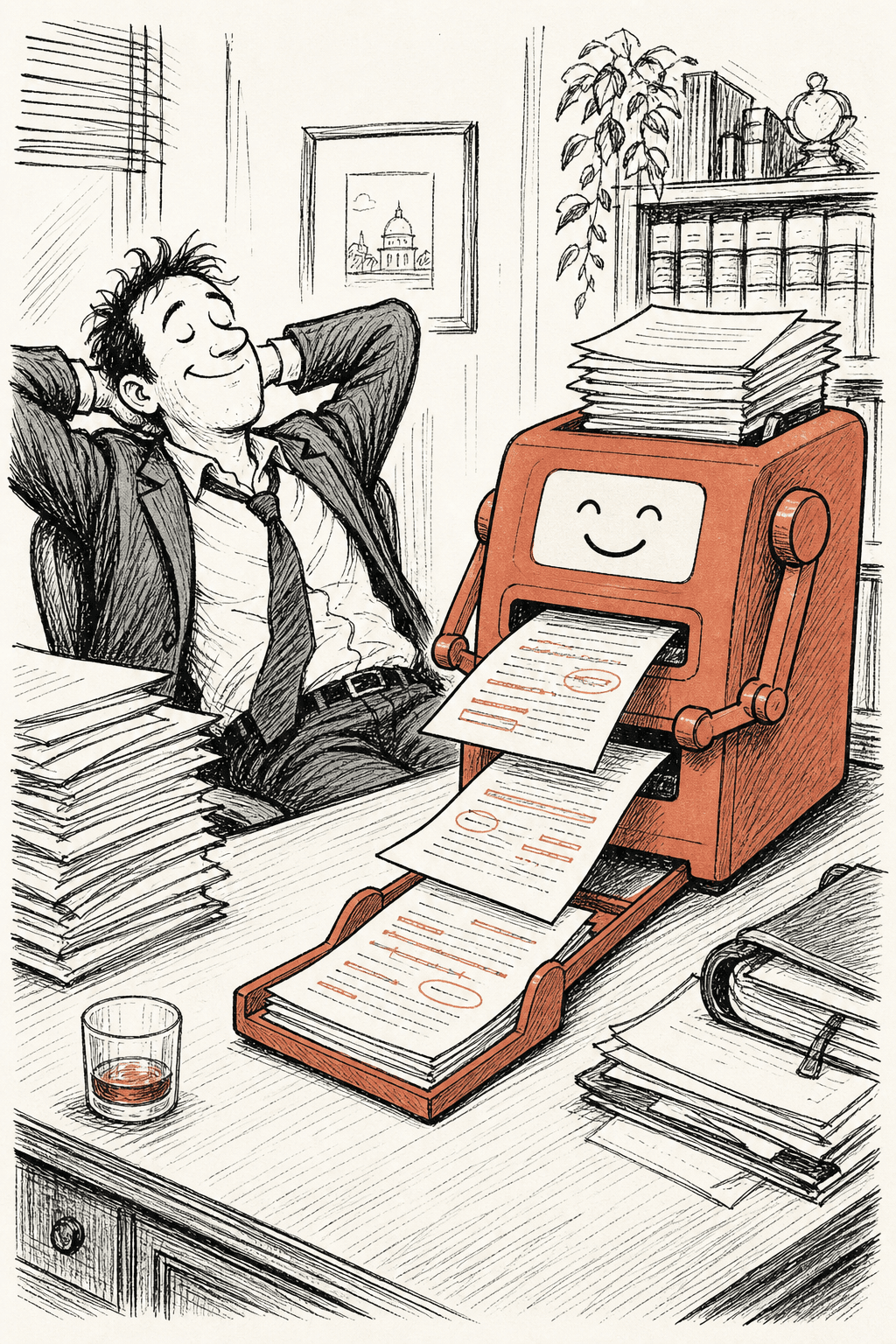
Spellbook, which builds AI tooling for lawyers who spend their days marking up contracts, put the tedious first pass on top of Claude's API. The work it automates is the part every deal needs and no partner enjoys: reading a draft clause by clause, flagging the terms that expose the client, and suggesting redlines against a known-good position. That is repetitive, pattern-heavy reading, which is exactly where a model earns its keep.
The number that matters is throughput. Spellbook reports 530,000 contract reviews a month running through the platform. At that volume the interesting engineering is not the prompt, it is everything around it: keeping each review grounded in the firm's own standards, returning edits a lawyer can accept or reject rather than a wall of prose, and doing it fast enough to sit inside the drafting workflow instead of beside it.
Worth noting what the corpus does not spell out: the human lawyer still signs off. The volume figure counts machine reviews, not deals closed unread. The gain is in cutting the hours a person spends on the first read, not in removing the person.
Box wires its stored files into agents with Gemini Embeddings 2
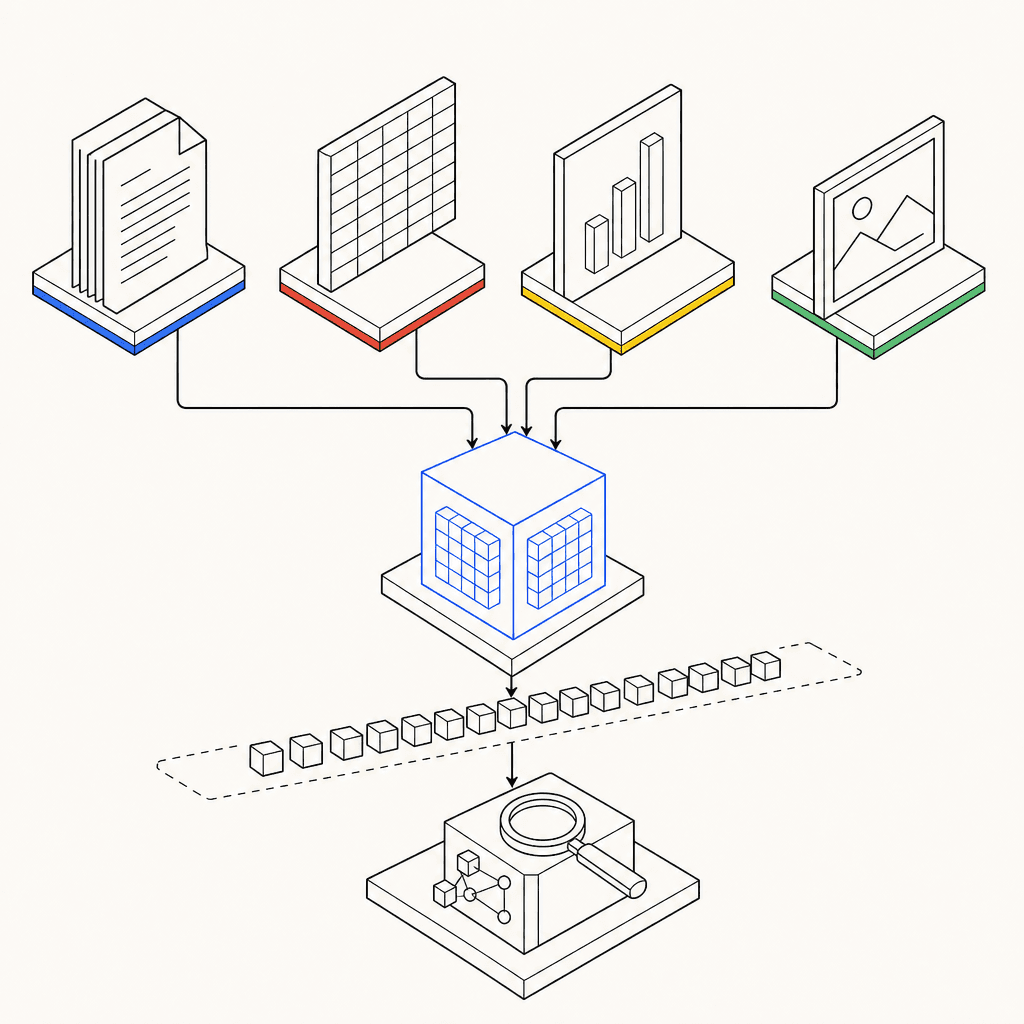
Box, the enterprise content platform where large companies keep documents like financial models, clinical trial protocols and M&A due-diligence files, is rebuilding how those files get searched. The old way indexed text. The new approach uses Google's Gemini Embeddings 2 to turn documents, including their charts, tables and images, into a form an agent can actually retrieve against, so a question can be answered from a slide or a spreadsheet, not just the paragraphs around it.
The mechanism is the point. Embeddings are numerical fingerprints of content that let a system find what is relevant by meaning rather than by keyword. Making them multimodal means a scanned diagram or a figure inside a PDF becomes findable the same way a sentence is. For a company sitting on trillions of gigabytes of mixed-format files, that is the difference between an agent that can reason over the archive and one that trips over anything that is not plain text.
Box frames this as the biggest architectural shift for content management since the move to the cloud. The claim to watch is retrieval quality on messy real documents, which is where most enterprise search quietly falls apart.
Anthropic publishes a standard to let agents control hardware
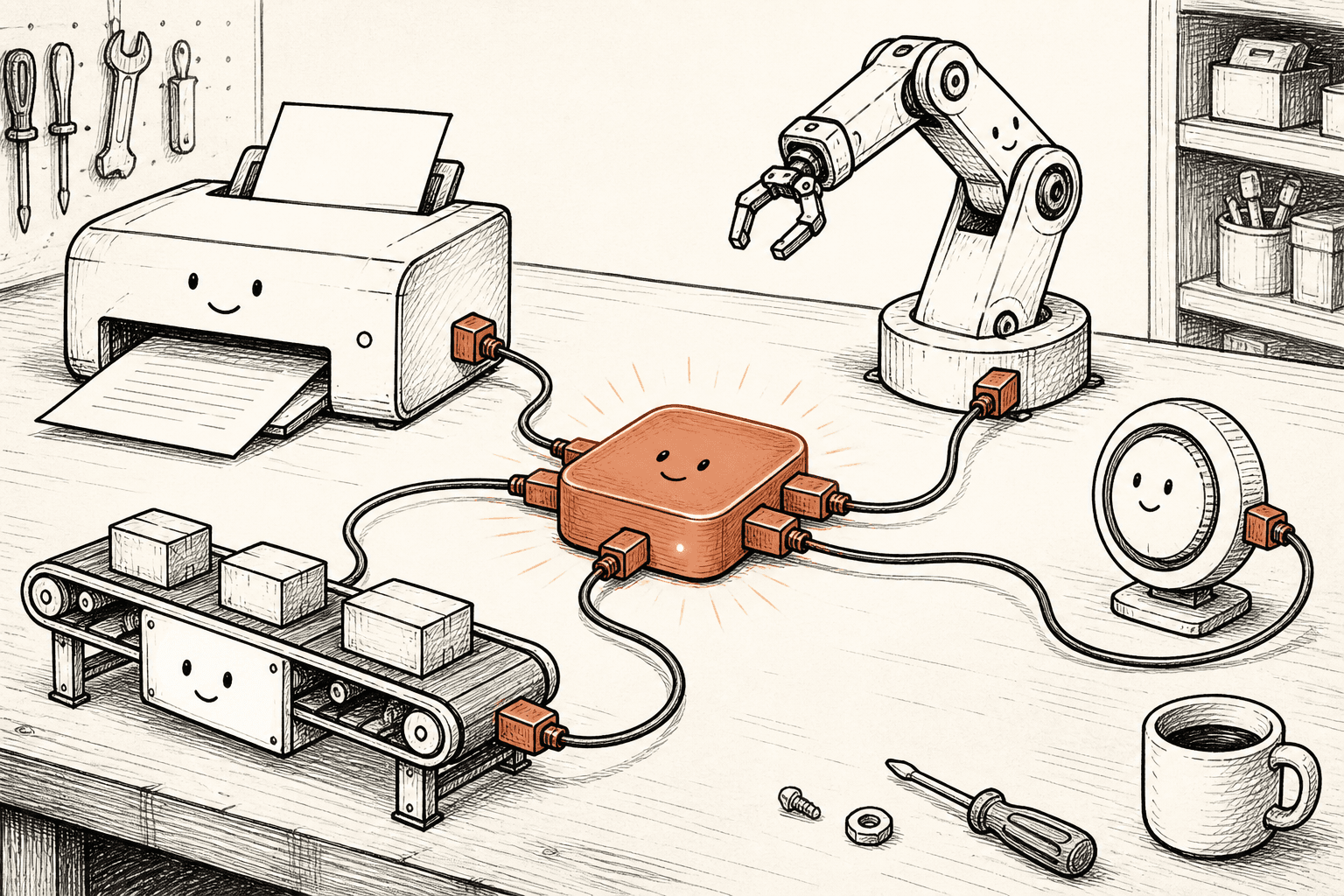
Anthropic, the maker of Claude, released a hardware standard meant to do for physical devices what earlier protocols did for software tools: give AI agents one consistent way to talk to machines instead of a custom integration for every gadget. The piece is a standardized driver interface, the layer that translates between a device and whatever wants to command it, so a sensor, a printer or a robot arm can expose what it does in a form an agent understands.
The consequence is about reach. Today an agent can call web APIs all day but has almost no reliable way to act on a physical object without bespoke plumbing built by someone for that one device. A shared interface means the same agent could, in principle, work across many devices, and devices could talk to each other through it. That is the groundwork for AI that operates equipment, not just documents.
Standards only matter if hardware makers adopt them, and none of that has happened yet. What changed this week is that a company with real distribution put a credible common interface on the table.
Nvidia reported to be buying Hugging Face for $13 billion

According to a report, Nvidia, the chipmaker whose hardware trains and runs most large models, is set to acquire Hugging Face for $13 billion. Hugging Face is the main public repository for open AI models and datasets, the place developers go to download, share and fine-tune models they do not build from scratch. It is quietly critical infrastructure for anyone working outside the closed offerings of the big labs.
The reason this matters to buyers, not just to Nvidia, is control of the distribution layer for open models. If the dominant chip vendor also owns the dominant model hub, the default path from downloading a model to running it on hardware runs through one company. That can make the open ecosystem smoother and better funded, and it can also concentrate a lot of leverage in a single pair of hands.
The deal is a report, not a closed transaction, and acquisitions of this size attract regulatory attention. For teams relying on open models today, the practical question is whether access and terms stay as permissive after the deal as before it.
Reply and tell me what repetitive reading or reviewing you are trying to automate, and I will tell you plainly whether it is the kind of agent Openhour builds.